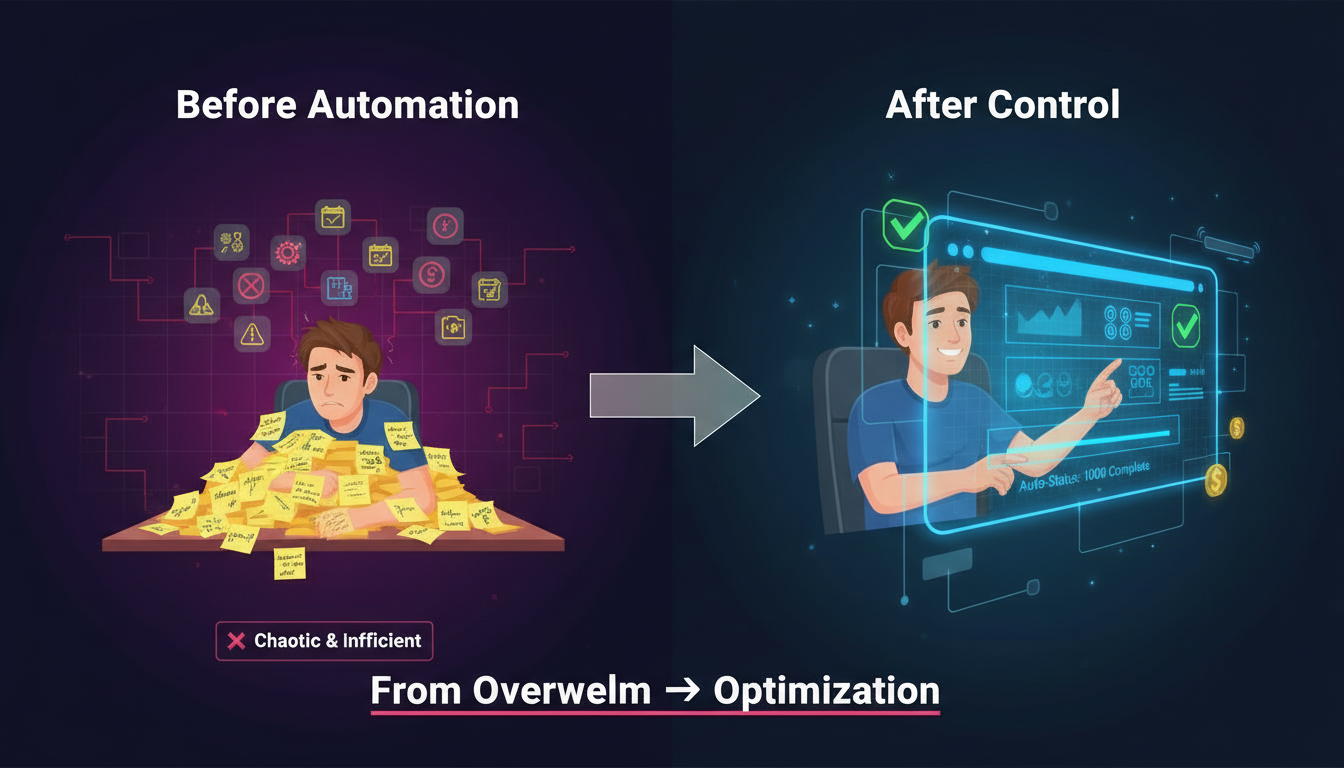

Choosing the right web developer is one of the most important decisions for your brand in 2026. Your website is not just a digital presence — it’s a sales tool, marketing engine, and automation hub that directly impacts growth.
A skilled web developer can help you rank higher on search engines, automate manual tasks, improve user experience, and scale your business. On the other hand, hiring the wrong developer can result in slow websites, poor SEO, constant fixes, and wasted money.
This complete guide will help you choose the best web developer for your brand with confidence, clarity, and long-term success in mind.
Why Choosing the Right Web Developer Matters
A professional web developer doesn’t just build pages — they build systems.
The right developer helps you:
- Strengthen your brand identity
- Improve website performance
- Boost SEO rankings
- Automate business operations
- Increase conversions and revenue
A poor choice often leads to manual workarounds, technical debt, and lost opportunities.
Types of Web Developers You’ll Encounter
Understanding developer types helps you choose correctly.
Front-End Developers
- Focus on design and user interface
- Work with HTML, CSS, JavaScript
- Improve usability and visual appeal
Back-End Developers
- Handle databases, servers, and logic
- Build automation and integrations
- Ensure security and scalability
Full-Stack Developers
- Combine front-end and back-end skills
- Ideal for custom websites and automation
- Better long-term flexibility
For most brands, a full-stack or team-based approach delivers the best results.
Key Skills to Look for in a Web Developer
1. Strong SEO Knowledge
Your developer should understand:
- Clean code structure
- Page speed optimization
- Mobile-first indexing
- Schema markup
SEO-friendly development saves you from manual fixes later.
2. Experience with Automation
Modern websites rely on automation to scale.
Look for skills in:
- CRM integration
- Email automation
- Payment gateways
- Analytics and tracking
Automation reduces manual workload and improves efficiency.
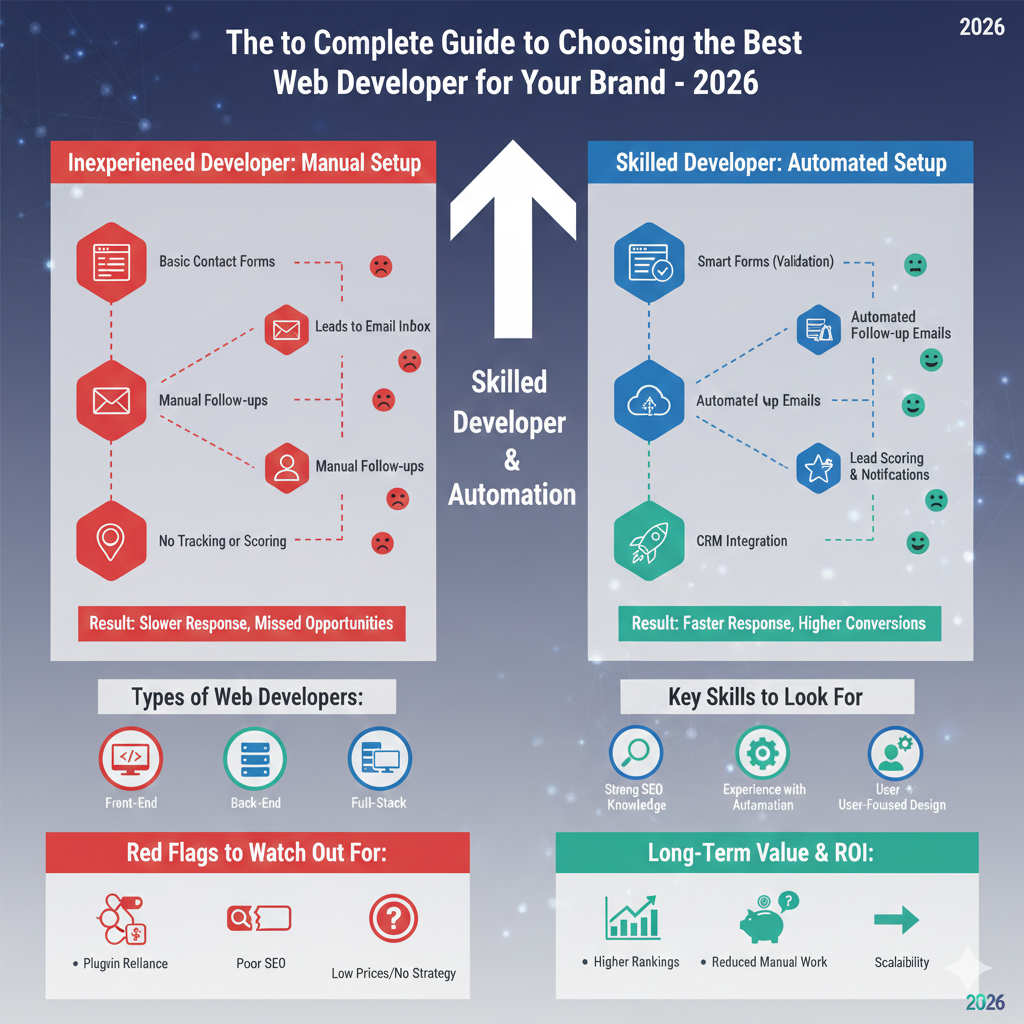
Manual Operations vs Automation: Developer Impact
Example: Lead Management
Manual Setup (Inexperienced Developer):
- Basic contact forms
- Leads sent to email inbox
- Manual follow-ups
- No tracking or scoring
Automated Setup (Skilled Developer):
- Smart forms with validation
- CRM integration
- Automated follow-up emails
- Lead scoring and notifications
Result: Faster response times and higher conversion rates.
Questions to Ask Before Hiring a Web Developer
Technical & Strategy Questions
- How do you optimize websites for SEO?
- How do you handle automation and integrations?
- What is your approach to performance and security?
Process & Communication Questions
- How do you manage revisions?
- Do you provide documentation?
- What support do you offer after launch?
Clear answers indicate professionalism and experience.
Red Flags to Watch Out For
Avoid developers who:
- Rely heavily on plugins for basic features
- Ignore SEO fundamentals
- Offer extremely low prices with no strategy
- Cannot explain their technical decisions
Cheap shortcuts often result in expensive fixes later.
Cost vs Value: Making the Right Investment
The best web developer may not be the cheapest — but they deliver the highest ROI.
Value-focused developers provide:
- Scalable architecture
- Reduced manual work
- Long-term SEO benefits
- Ongoing performance improvements
Think of web development as an investment, not an expense.
Conclusion: Choose a Developer Who Builds Growth
The best web developer for your brand understands more than code — they understand business, SEO, automation, and user behavior. By choosing wisely, you set your brand up for long-term success.