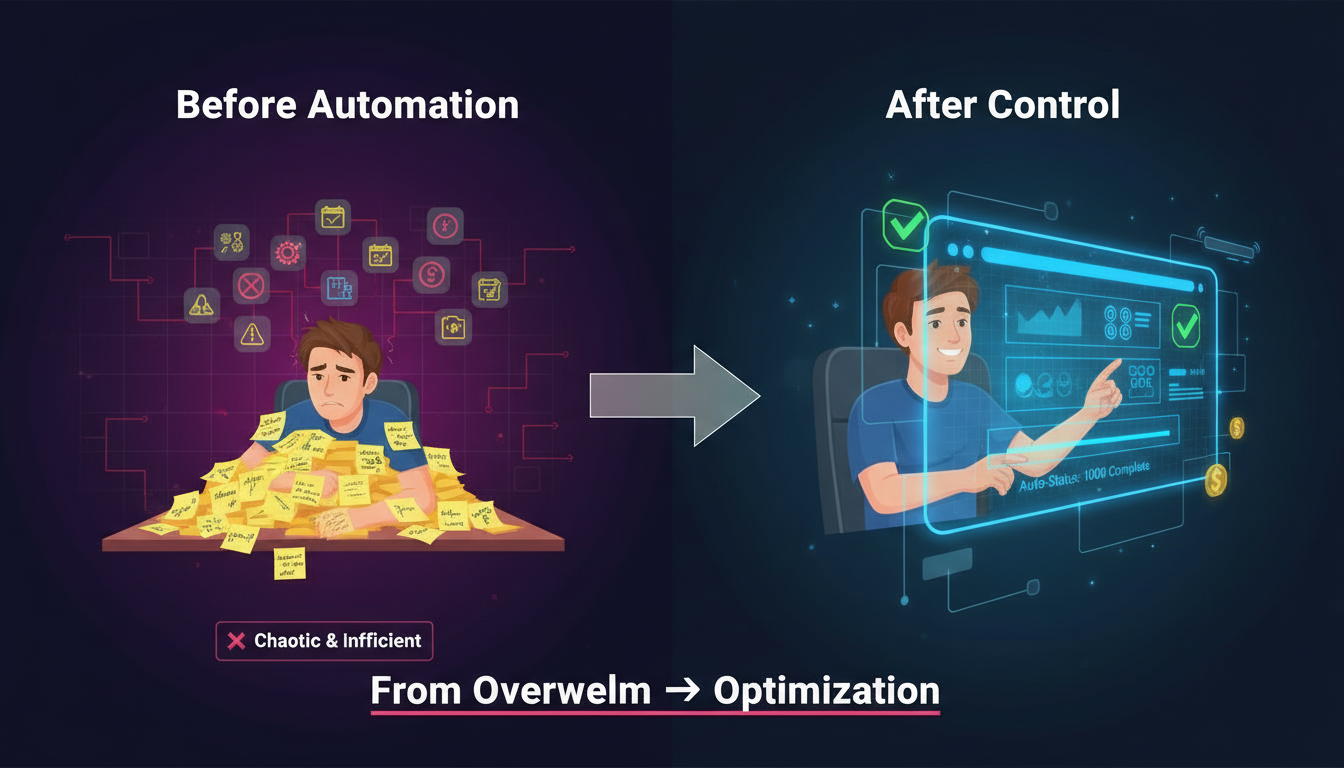

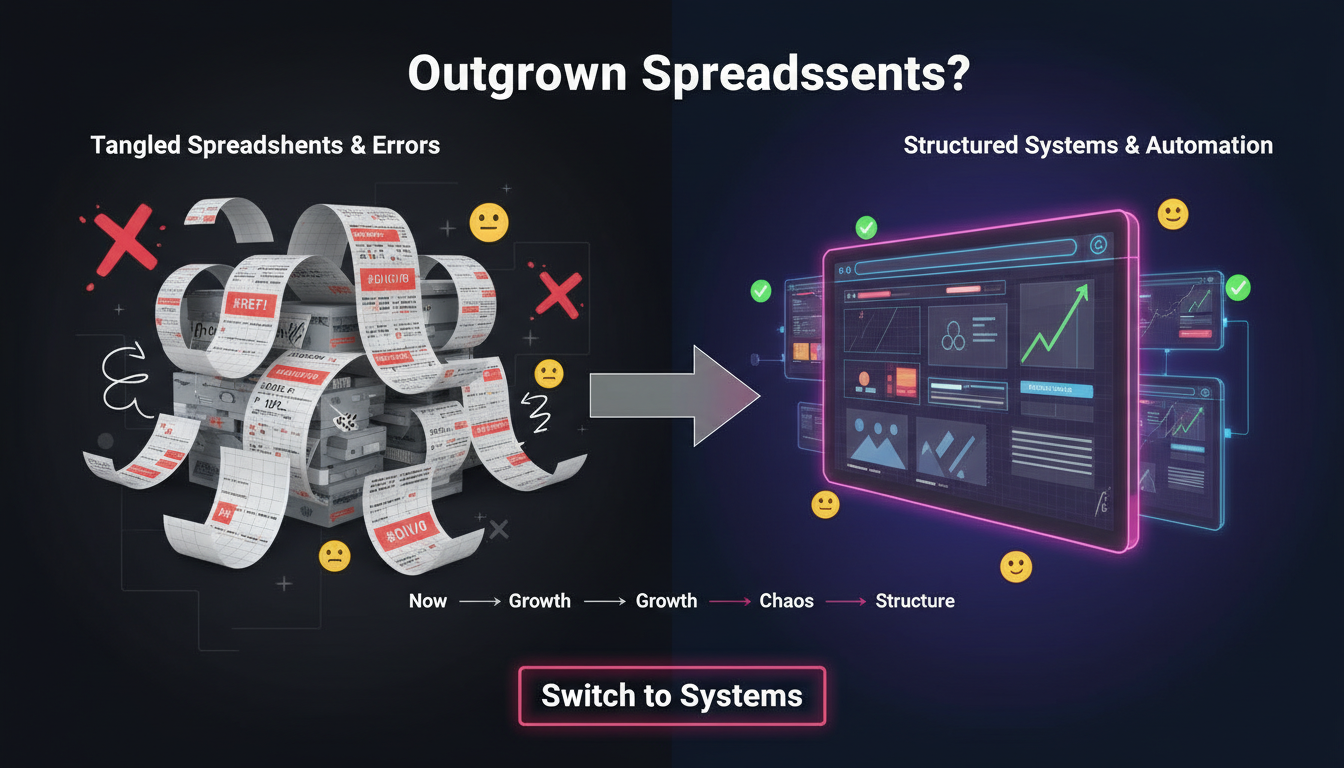
Spreadsheets are everywhere. From tracking sales to managing operations, many businesses rely on them because they’re familiar, flexible, and inexpensive. At first glance, spreadsheets feel like the easiest solution.
But as a business grows, spreadsheets quietly become a risk rather than a tool. What once helped you stay organized can start slowing decisions, creating errors, and limiting scale—often without you noticing.
This article breaks down the hidden risks of running your business on spreadsheets and explains when it’s time to move beyond them.
Why Businesses Depend on Spreadsheets
Spreadsheets are popular for good reasons:
- Easy to set up
- Low cost or free
- Familiar to most teams
- Flexible for many use cases
For early-stage businesses, spreadsheets feel like the perfect answer. The problem is not using spreadsheets—it’s using them for too long.
The Illusion of Control
Spreadsheets create a sense of control, but that control is fragile.
One File, Many Versions
When multiple people work on spreadsheets:
- Different versions start circulating
- Data becomes inconsistent
- No one knows which file is correct
This leads to decisions based on outdated or incorrect information.
Manual Updates Create Blind Spots
Spreadsheets depend heavily on manual input. When updates are missed:
- Reports become inaccurate
- Trends are hidden
- Issues surface too late
By the time problems appear, they’ve already grown.
Hidden Operational Risks
Human Error Is Inevitable
A single wrong formula or accidental deletion can:
- Break reports
- Change financial outcomes
- Go unnoticed for weeks
Unlike structured systems, spreadsheets offer little protection against mistakes.
No Built-In Accountability
Spreadsheets often lack:
- Clear ownership
- Change tracking
- Audit trails
This makes it hard to answer simple questions like:
- Who updated this data?
- When was it changed?
- Why does it look different today?
Scalability Problems You Don’t See Coming
Spreadsheets work—until they don’t.
As your business grows:
- Files become larger and slower
- Collaboration becomes difficult
- Data becomes harder to maintain
What used to take minutes can start taking hours.
No Built-In Accountability
Spreadsheets were never designed for:
- Real-time collaboration at scale
- Complex workflows
- Cross-department operations
The more your business grows, the more spreadsheets hold it back.
Security and Compliance Risks
Sensitive Data Is Hard to Protect
Spreadsheets often contain:
- Financial data
- Customer information
- Internal performance metrics
Yet they are:
- Easily shared
- Often stored without encryption
- Hard to control access to
This creates serious security and compliance risks.
Limited Backup and Recovery
If a spreadsheet is:
- Deleted
- Corrupted
- Overwritten
Recovery is often difficult—or impossible.
The Cost You Don’t See on the Balance Sheet
The biggest spreadsheet risk isn’t money—it’s time.
Hidden costs include:
- Hours spent fixing errors
- Delays in decision-making
- Repeated work
- Team frustration
Over time, this slows execution and limits growth.
When Spreadsheets Stop Being the Right Tool
Spreadsheets are no longer enough when:
- Multiple teams rely on the same data
- Processes depend on timely updates
- Accuracy directly impacts revenue
- Leadership needs real-time visibility
At this stage, spreadsheets shift from helpful to harmful.
Businesses can reduce productivity risks by focusing on systems and structure.
What to Do Instead of Relying on Spreadsheets
The solution isn’t abandoning spreadsheets entirely—it’s using the right tools for the right jobs.
Modern workflow and process systems:
- Centralize data
- Reduce manual updates
- Improve visibility
- Support growth without chaos
Spreadsheets can still support analysis—but they shouldn’t run your business.
Conclusion
Spreadsheets are powerful, but they come with hidden risks that grow as your business grows. What feels simple today can quietly introduce errors, slow decisions, and limit scalability tomorrow.
The smartest businesses recognize when spreadsheets have reached their limit—and take action before those limits hurt performance.