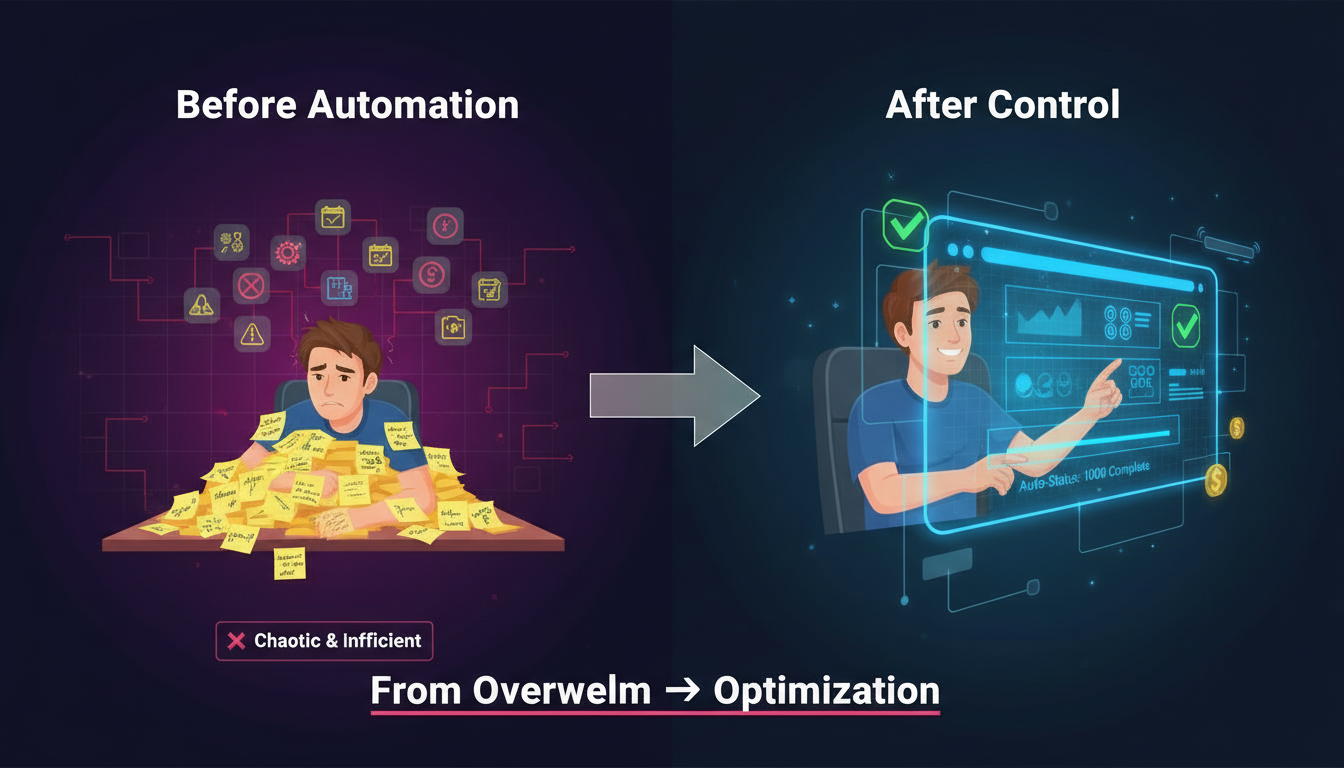

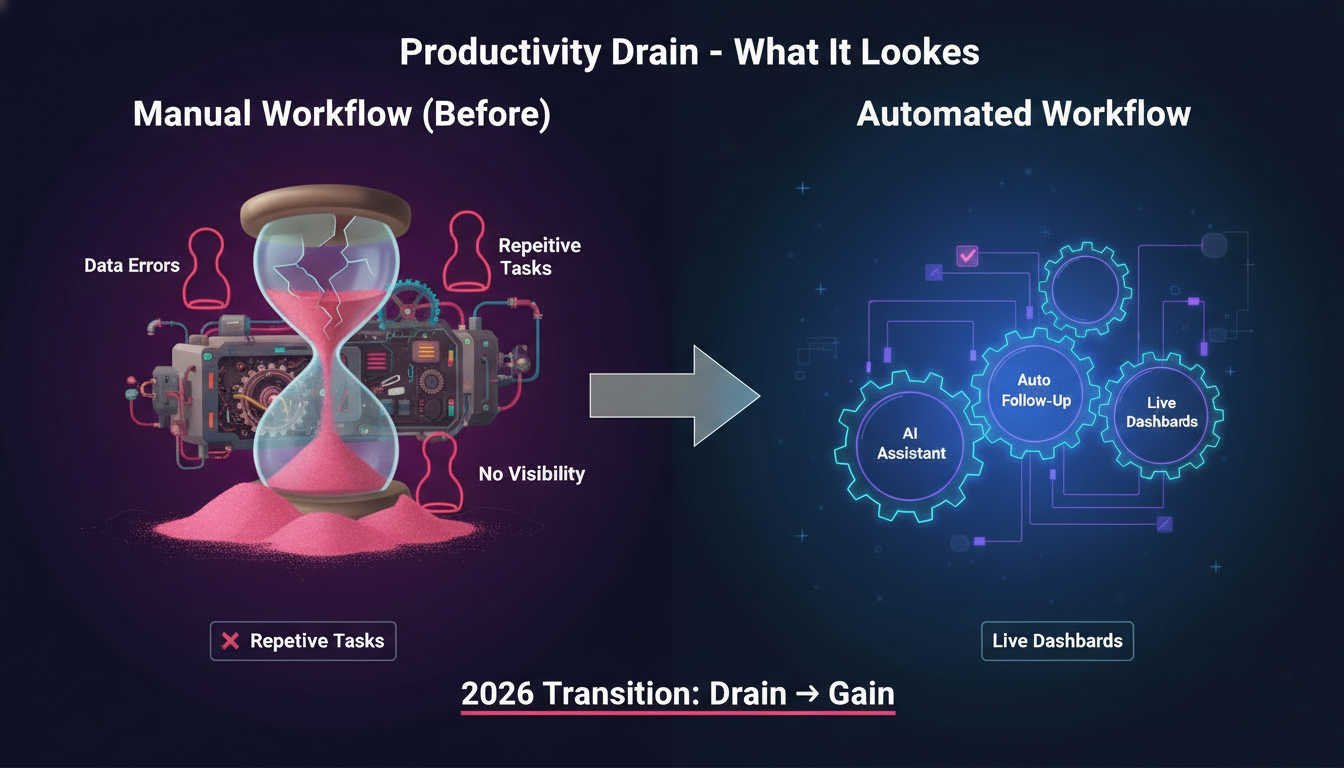
Low productivity is one of the biggest hidden risks facing modern businesses. It doesn’t always show up as a sudden failure or financial loss. Instead, it slowly drains time, money, and energy—until growth stalls and teams feel constantly overwhelmed.
Many companies assume low productivity is a people problem. In reality, it’s usually a process and system problem. This article explains the risks of low productivity, how it impacts businesses, and what leaders can do to fix it before it becomes a serious threat.
The true value of automation is reliability.
Reliable systems do the right thing every time—without reminders, stress, or human error. This article explains why reliability matters more than speed, how automation creates consistency, and what reliable operations actually look like in practice.
What Is Low Productivity?
Low productivity occurs when employees spend a large portion of their time on tasks that produce little value. This includes:
- Repetitive manual work
- Unclear priorities
- Frequent interruptions
- Poor coordination between teams
- Inefficient workflows
Even highly skilled employees become unproductive when systems and processes work against them.
The Financial Risk of Low Productivity
Low productivity directly affects a company’s bottom line.
Higher Operating Costs
When tasks take longer than necessary, businesses pay more for the same output:
- Increased labor costs
- Overtime expenses
- Higher error correction costs
Reduced Profit Margins
Inefficient operations mean more resources are consumed to deliver the same results, shrinking margins over time.
Impact on Growth and Scalability
Low productivity makes growth difficult and expensive.
- Projects take longer to complete
- Teams struggle to handle increased demand
- Businesses hire more staff instead of improving efficiency
This creates a cycle where growth leads to chaos instead of progress.
Employee Burnout and Morale Issues
Productivity problems often show up first in employee well-being.
Mental Fatigue
Constant manual work and unclear processes cause frustration and exhaustion.
High Turnover
When employees feel busy but unproductive, motivation drops, leading to resignations and higher hiring costs.
Low morale spreads quickly and affects overall performance.
Poor Customer Experience
Low productivity doesn’t stay internal—it impacts customers too.
- Slow response times
- Missed deadlines
- Inconsistent service quality
- Communication gaps
Customers may not see the internal struggles, but they feel the results. Over time, trust and loyalty decline.
Hidden Risks Leaders Often Miss
Low productivity is dangerous because it’s not always obvious.
- Teams look busy, but progress is slow
- Problems are blamed on workload, not systems
- Short-term fixes hide long-term inefficiencies
Without clear visibility into workflows and performance, leaders may underestimate how serious the issue has become.
Common Causes of Low Productivity
Low productivity usually comes from a combination of factors:
- Manual and outdated processes
- Lack of standardized workflows
- Too many disconnected tools
- Poor communication and task ownership
- Limited automation
Fixing productivity requires addressing these root causes—not pushing people to work harder.
How to Reduce the Risk of Low Productivity
Businesses can reduce productivity risks by focusing on systems and structure.
Improve Workflow Clarity
- Define clear steps for recurring tasks
- Assign ownership at every stage
- Remove unnecessary approvals
Reduce Manual Work
- Eliminate repetitive data entry
- Standardize reporting
- Use tools that support existing workflows
Measure What Matters
- Track task completion time
- Identify bottlenecks
- Review processes regularly
Small improvements compound into major productivity gains.
Productivity Is a Strategic Advantage
High productivity isn’t about speed alone. It’s about consistency, clarity, and focus.
Businesses with strong productivity systems:
- Deliver results faster
- Scale without stress
- Retain talent
- Provide better customer experiences
Productivity becomes a competitive advantage—not a daily struggle.
Conclusion
Low productivity is a serious business risk that quietly erodes profits, morale, and growth. It’s rarely caused by lack of effort and almost always caused by inefficient systems and workflows.
The sooner businesses address productivity issues, the easier and cheaper they are to fix.