
A landing page can be more than just a digital placeholder — in 2026, it can be your most powerful conversion tool. Every click, scroll, and interaction counts, and businesses that leverage web design strategically can turn simple landing pages into high-performing conversion machines.
Many businesses still rely on static, generic pages that require manual follow-ups and offer little guidance to users. Modern web design integrates automation, psychology-driven layouts, and performance optimization to convert visitors efficiently.
This article explores actionable web design strategies that transform landing pages into conversion machines, including practical examples of automation versus manual operations.
Why Landing Page Design Matters
The landing page is often the first touchpoint between your brand and potential customers. Its design affects:
- User engagement
- Lead generation
- Sales conversions
- Brand credibility
A well-designed landing page guides visitors through a seamless journey toward your desired action.
Key Web Design Strategies for Conversion
1. Clear and Compelling Call-to-Actions (CTAs)
CTAs should be visually prominent and persuasive.
Tips:
- Use contrasting colors
- Position CTAs above the fold
- Limit options to reduce decision fatigue
- Include action-oriented text
Automated A/B testing can determine which CTA works best.
2. Minimalist Design & Focused Messaging
Clutter distracts and confuses visitors.
Best practices:
- Limit content to key messages
- Use whitespace effectively
- Highlight value propositions
- Keep forms short and simple
Automation tools can personalize content based on user behavior, increasing relevance.
3. Mobile-First & Responsive Layout
Most users access landing pages via mobile devices.
Benefits:
- Faster load times
- Improved user experience
- Better SEO rankings
Responsive design removes the need for separate mobile versions and manual adjustments.
Manual Operations vs Automation: Landing Page Examples
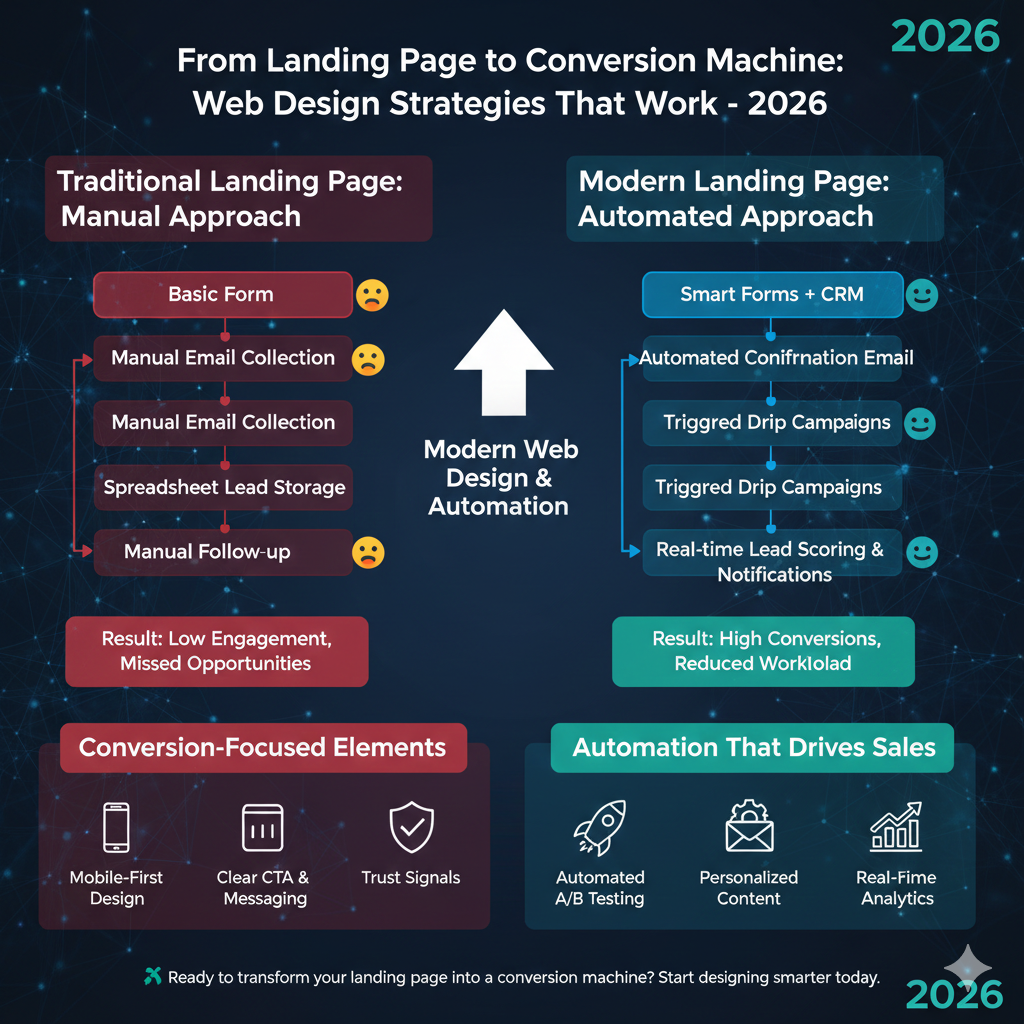
Example: Lead Capture
Manual Approach:
- Collect emails via a basic form
- Store leads in spreadsheets
- Follow up manually
- Risk of delayed responses
Automated Approach:
- Smart forms integrated with CRM
- Automated confirmation emails
- Triggered drip campaigns
- Real-time lead scoring and notifications
Result: Increased engagement, higher conversions, and reduced manual workload.
Enhancing User Experience to Boost Conversions
Fast Load Speeds
- Compress images
- Use efficient code
- Enable browser caching
Visual Hierarchy
- Highlight key offers and CTAs
- Use typography to guide attention
- Ensure scannable content
Trust & Credibility Signals
- Display customer reviews
- Include security badges
- Highlight guarantees or return policies
These elements reduce friction and build confidence in users.
Using Analytics & Feedback for Continuous Optimization
Behavior Tracking
- Heatmaps to see where users click
- Scroll tracking to measure engagement
- Funnel analysis to detect drop-offs
Iterative Improvements
- A/B testing headlines, CTAs, images
- Automation tools push updates based on performance
- Continuous monitoring ensures growth
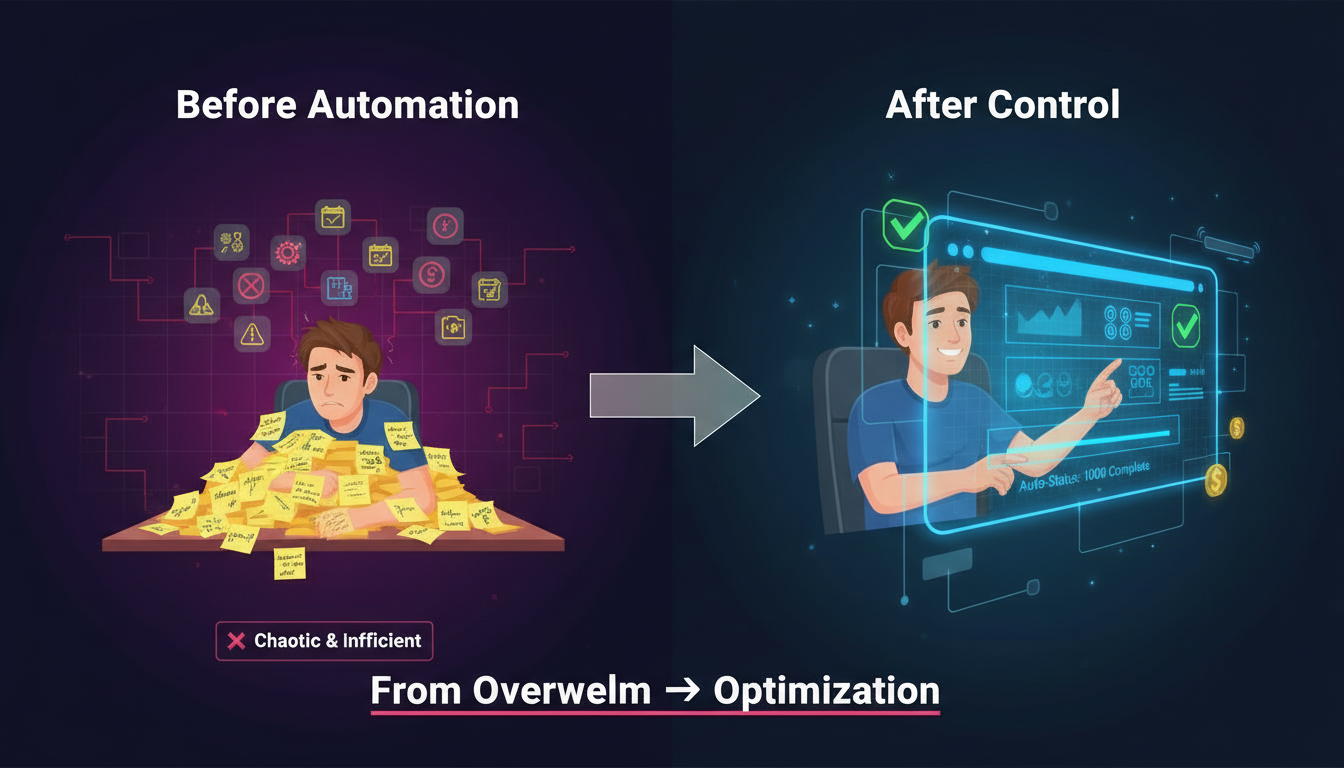
Automation makes optimization faster and more accurate than manual guesswork.
Traditional vs Modern Landing Page Approach
Traditional Landing Page:
- Generic templates
- Manual email follow-ups
- Limited tracking
- Lower engagement and conversions
Modern Conversion-Optimized Page:
- Custom design and layout
- Automated workflows
- Behavior tracking and personalization
- Higher conversions and ROI
Conclusion: Turn Your Landing Page Into a Conversion Machine
A landing page designed with strategy, automation, and user focus can dramatically improve engagement and sales. Businesses that integrate modern web design and automation outperform competitors relying on static, manual processes.