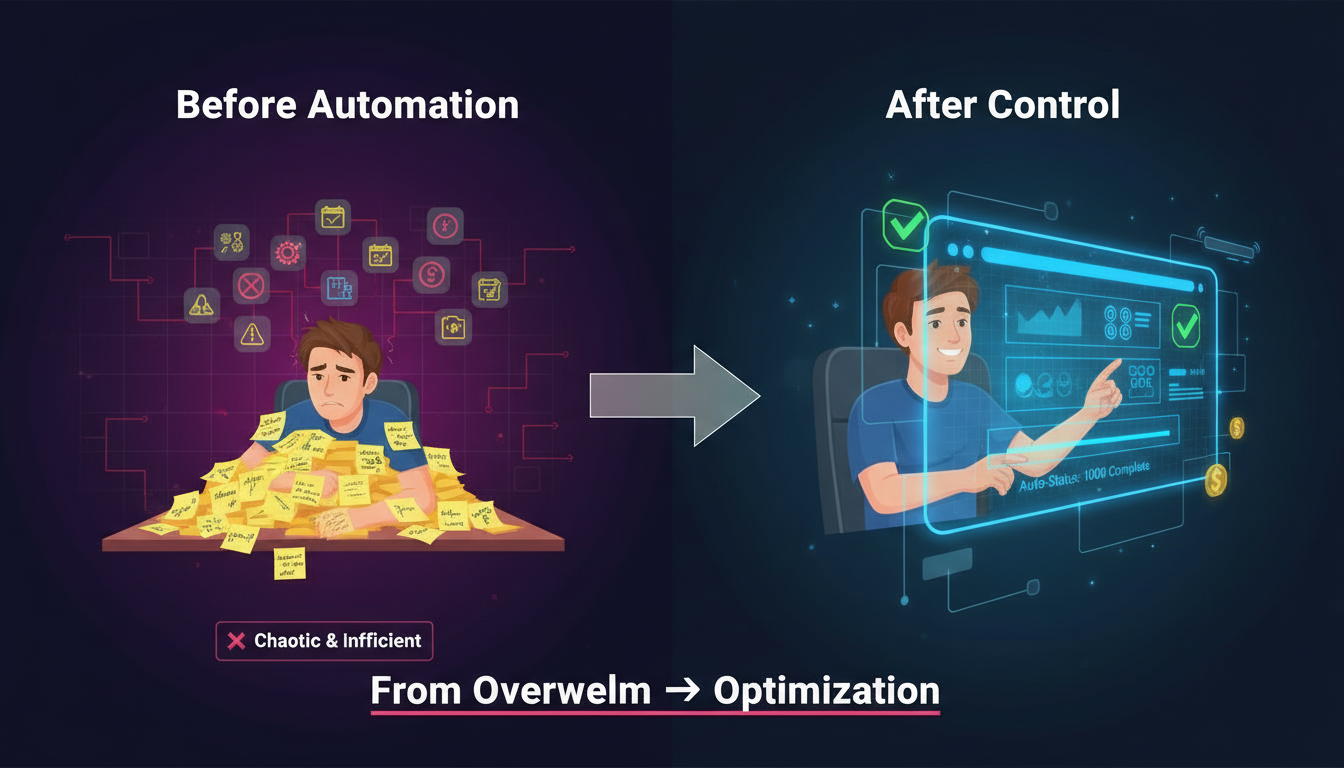

When businesses talk about automation, speed is often the headline benefit. Faster processes. Quicker responses. Shorter turnaround times. While speed is important, it’s not the real reason automation matters.
The true value of automation is reliability.
Reliable systems do the right thing every time—without reminders, stress, or human error. This article explains why reliability matters more than speed, how automation creates consistency, and what reliable operations actually look like in practice.
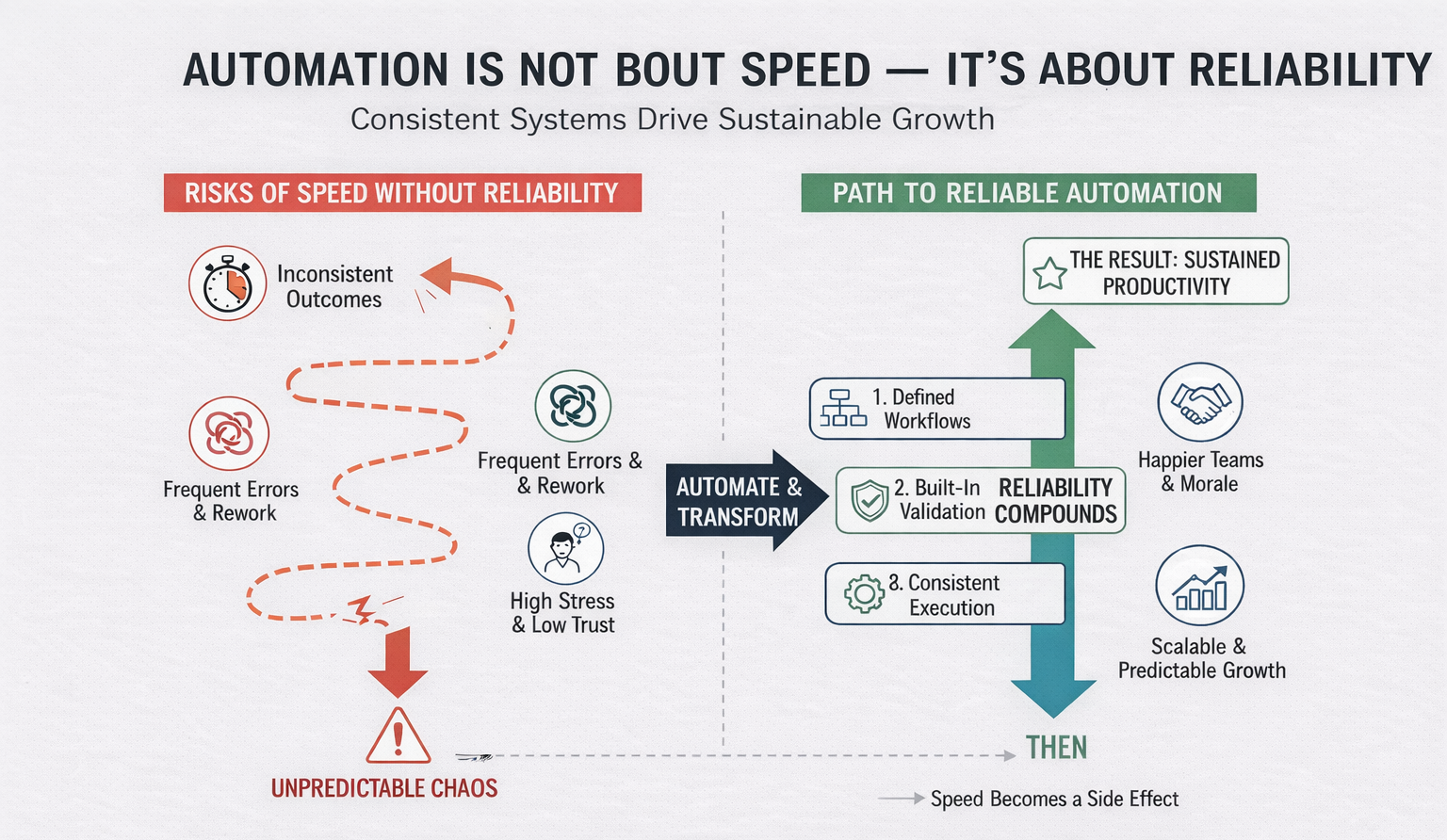
Speed Without Reliability Creates Risk
Fast processes are useless if they produce inconsistent results. Many businesses operate quickly but still face frequent issues:
- Tasks are skipped or forgotten
- Steps are handled differently by each employee
- Errors appear at the same point every week
- Quality depends on who is working that day
Speed amplifies problems when systems are unreliable. Automation fixes this by ensuring work happens correctly, every time.
What Reliability Means in Business Operations
Reliability is the ability of a system to perform consistently under normal conditions.
In a reliable business:
- Tasks are completed in the correct order
- Required steps cannot be skipped
- Data is accurate and up to date
- Outcomes are predictable
Automation creates this reliability by replacing memory, habit, and manual tracking with structured workflows.
Human Effort Is Valuable—but Inconsistent
People are excellent at judgment, creativity, and decision-making. But they are not built for repetitive execution.
Where Manual Work Breaks Down
Manual processes rely on:
- Memory and reminders
- Personal interpretation of steps
- Individual energy levels
- Availability and focus
Even great employees make mistakes when work is repetitive. Automation supports teams by handling routine execution reliably.
How Automation Creates Reliable Systems
Automation doesn’t rush work—it stabilizes it.
Defined Workflows
Automated workflows ensure:
- Each task follows the same path
- Steps occur in the correct order
- Handoffs happen automatically
- Nothing is missed or duplicated
Built-In Rules and Validation
Reliable systems include checks that:
- Prevent incomplete submissions
- Enforce approvals
- Flag inconsistencies
- Maintain data quality
These guardrails protect the business without constant supervision.
Reliability Reduces Stress and Firefighting
Unreliable operations create constant pressure. Teams spend time fixing issues instead of making progress.
Automation changes this by:
- Reducing last-minute emergencies
- Eliminating repeated errors
- Making outcomes predictable
- Allowing proactive planning
When systems are reliable, teams can focus on improvement rather than damage control.
Customers Trust Reliable Businesses
From a customer’s perspective, reliability matters more than speed.
Customers expect:
- Accurate information
- Consistent service
- On-time delivery
- Clear communication
Automation ensures these expectations are met consistently, building trust and long-term loyalty.
Reliability Enables Sustainable Growth
Growth increases complexity. Without reliable systems, growth creates chaos.
Scaling Without Breaking
Automation allows businesses to:
- Handle higher volume without stress
- Maintain quality as demand increases
- Onboard new team members faster
- Operate consistently across teams
Reliable systems scale. Manual effort does not.
Speed Becomes a Side Effect of Reliability
Ironically, when systems are reliable, speed improves naturally.
- Less rework
- Fewer delays
- Clear handoffs
- Faster decisions
Automation doesn’t chase speed—it earns it through consistency.
Conclusion
Automation is not about doing things faster at any cost. It’s about building systems that work the same way every time—accurately, consistently, and without stress.