

In 2026, competition online is fiercer than ever. Almost every business has a website — but only a few actually rank, convert, and dominate search results. The difference is rarely luck. It’s strategy, performance, and customization.
A custom website is built specifically for your business goals, audience, and SEO strategy. Unlike templates or generic builders, custom websites give you full control over speed, structure, automation, and user experience — all of which directly impact rankings and conversions.
This article explains how a custom website can help you outrank competitors online and why it’s one of the smartest investments for long-term growth.
Why Template Websites Struggle to Compete
Template-based websites may look decent, but they come with serious limitations.
Common issues include:
- Bloated and unnecessary code
- Slow page load speed
- Limited SEO flexibility
- Generic layouts used by thousands of sites
- Manual workarounds for automation
Search engines reward performance, relevance, and user experience — areas where templates often fall short.
What Makes a Custom Website Different?
A custom website is designed and developed from the ground up around your business.
Key Advantages of Custom Websites
- Clean, lightweight code
- SEO-friendly architecture
- Tailored user journeys
- Advanced automation
- Scalability without redesign
Customization gives you a competitive edge that templates simply cannot match.
SEO Benefits of a Custom Website
1. Optimized Site Structure
Custom websites are built with SEO in mind from day one.
Benefits include:
- Logical URL structure
- Proper heading hierarchy (H1–H6)
- Schema markup integration
- Improved crawlability
This helps search engines understand and rank your content faster.
2. Faster Load Speed & Core Web Vitals
Speed is a major ranking factor.
Custom development allows:
- Optimized assets
- No unnecessary plugins
- Efficient caching
- Better mobile performance
Faster websites rank higher and convert better.
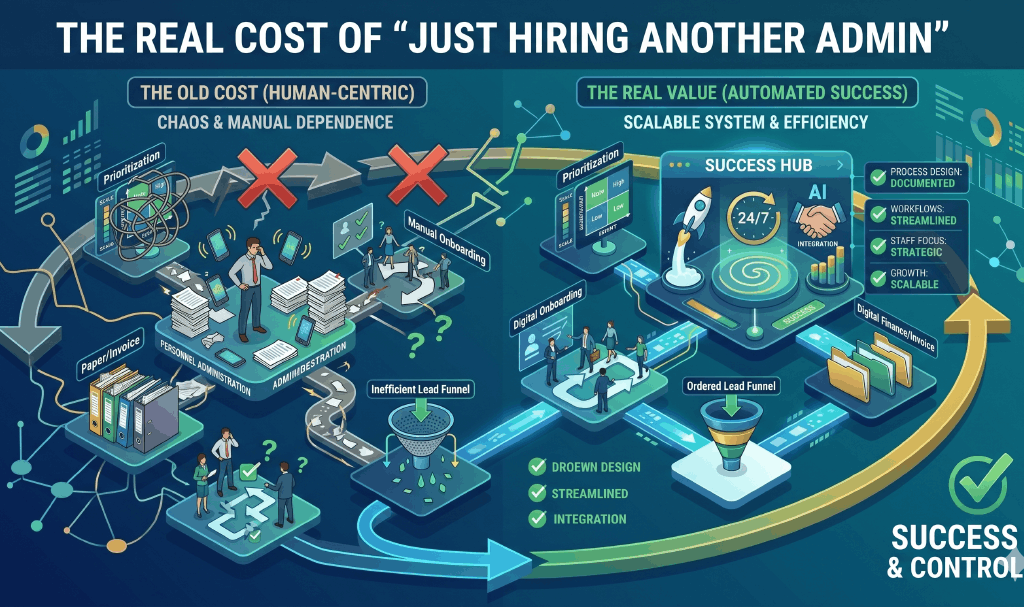
Manual Operations vs Automation: A Clear Advantage
Example: Content & SEO Management
Manual Process (Template Website):
- Manual SEO fixes
- Plugin conflicts
- Slow updates
- Repetitive tasks
Automated Process (Custom Website):
- Automated schema generation
- SEO-ready templates
- Auto-optimized images
- Streamlined publishing workflows
Result: Less manual effort, better SEO consistency, faster scaling.
Custom UX Design That Beats Competitors
User-Focused Navigation
- Custom menus based on user behavior
- Conversion-driven layouts
- Clear CTAs for each funnel stage
Personalization & Dynamic Content
Custom websites allow:
- Location-based content
- Behavior-triggered CTAs
- Personalized landing pages
Personalized experiences improve engagement and reduce bounce rates — key ranking signals.
Automation That Scales Your Competitive Advantage
Automation is where custom websites truly shine.
Marketing Automation
- Smart lead forms
- Automated email sequences
- Behavior-based popups
Sales Automation
- CRM integration
- Lead scoring
- Automated follow-ups
Support Automation
- AI chatbots
- Knowledge bases
- Automated ticket routing
Automation removes human error and speeds up operations.
Custom Website vs Competitor Comparison
Competitor Using Template Site:
- Generic design
- Slow performance
- Manual processes
- Limited SEO growth
Your Custom Website:
- Unique brand experience
- High-speed performance
- Automated workflows
- Strong SEO authority
Search engines and users both favor the better experience.
Long-Term ROI of a Custom Website
A custom website is not a one-time expense — it’s a long-term asset.
Long-term benefits include:
- Higher rankings
- Lower maintenance costs
- Better conversion rates
- Easier scaling
Over time, it consistently outperforms template-based sites.
Conclusion: Outrank, Outperform, Outgrow
If you want to outrank competitors online, a custom website is no longer optional — it’s essential. From SEO and speed to automation and personalization, custom development gives you total control over your digital presence.